
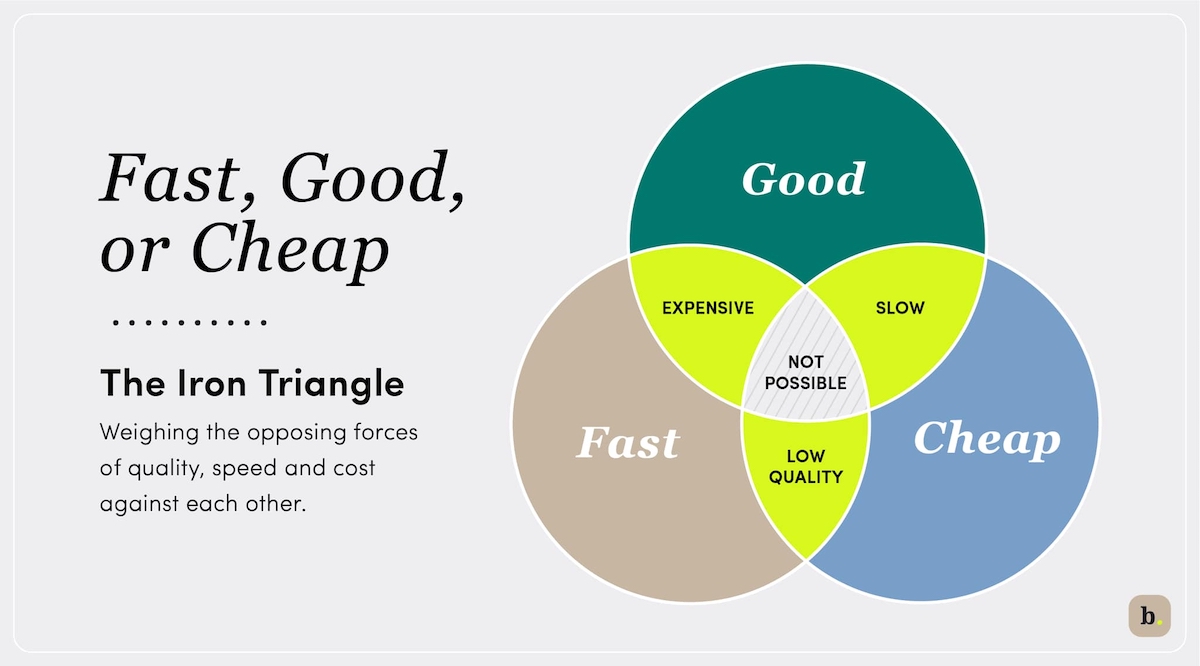

A builder once shared a piece of industry wisdom with me that has stuck in my head for years. He drew a triangle in the dirt and said, "Lauren, there are three things in construction: Cheap, Fast, and Good. But here’s the kicker - you can only ever pick two."
The logic was ironclad:
I’ve used this "Impossible Triangle" analogy countless times to explain the reality of profile building. You can DIY your personal brand (cheap), but it takes years of trial and error (slow). Or, you can bring in a specialist to get it done right and immediately (good and fast), but that requires investment.
Like catching a helicopter to the Grand Canyon instead of driving there (Yep, we did that when we were in Vegas for The Stevie Awards For Women In Business and I even did a video on it)
It’s a rule that governs almost every industry.
Until it didn’t.
In 2025, one of our audacious clients has officially proven that the impossible triangle is actually possible - but there was a massive psychological catch they had to overcome first.
The "Too Good to Be True" Problem
Enter David Antonacci, the founder of Teeny Tiny Homes.
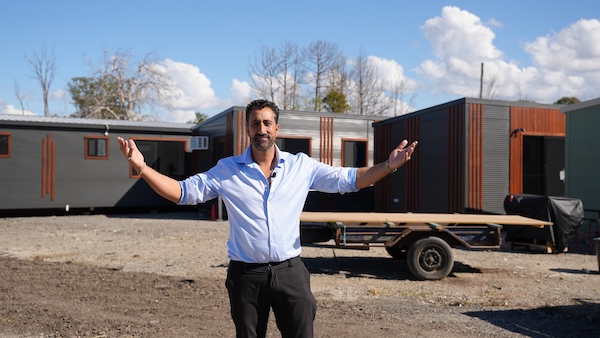
David cracked the code on tiny home manufacturing. He developed a process so efficient that he is currently churning out 12 to 14 homes a month. And because of his innovation, he can offer these homes at thousands of dollars less than his competitors. And here is the clincher: they are built to A1 Australian standards with full certifications.
So, he has all three: Fast. Good. Cheap.
But initially, instead of customers lining up around the block immediately, he faced a different problem. Human psychology.
When we are offered something significantly cheaper and faster than the market standard, our brains immediately scream: "What’s the catch?" We assume if it’s cheap and fast, it must be nasty. We assume corners are being cut. In the construction industry, where scepticism is high, being "too good to be true" is actually a marketing nightmare. Worse, in the unregulated tiny homes sector, where some unscrupulous manufacturers are building glorified caravans and many have already folded, taking investors' dollars with them, people are wary.
How Awards Bridge the Trust Gap
David didn't try to argue with the sceptics. He didn't lower his prices further, and he didn't slow down his production, scale back the design adaptability or reduce the certificates that come with each home.
Instead, he saw the value in leveraging awards to build credibility.
In just 18 months, Teeny Tiny Homes secured over 15 awards. And this wasn't a "spray and pray" approach; it was strategic.
Suddenly, the scepticism evaporated. The awards acted as a third-party trust currency. When a potential buyer thought, "How can it be this affordable?", the answer wasn't just a sales pitch - it was a shelf full of trophies backed by rigorous judging panels.
The awards provided the tangible validation that signalled quality to a sceptical audience. They differentiated his business from those relying on inflated claims.
The Lesson for Your Brand
We often see brilliant entrepreneurs who are the world’s best-kept secret because they aren't being seen or noticed. They have an incredible product or service - maybe even one that breaks the "Fast, Good, Cheap" rule - but they struggle to get the market to trust them. They can’t find a way to quickly explain their value and worth.
The lesson from Teeny Tiny Homes is simple:
Success isn't just about the work you do in the shadows; it's about stepping into the spotlight so your audacious efforts don't go unnoticed.
Audacious Tip:
If you are tired of explaining why you are the better choice, let the industry explain it for you. You don’t need to change your product; you need to change the perception. Time to become the industry-recognised leader.
Do you have the ingredients to grow like Teeny Tiny Homes this year?
We don’t just write entries; we build the kind of credible profiles that make trust issues a thing of the past.
Let’s talk about your audacious ambitions for 2026.

